
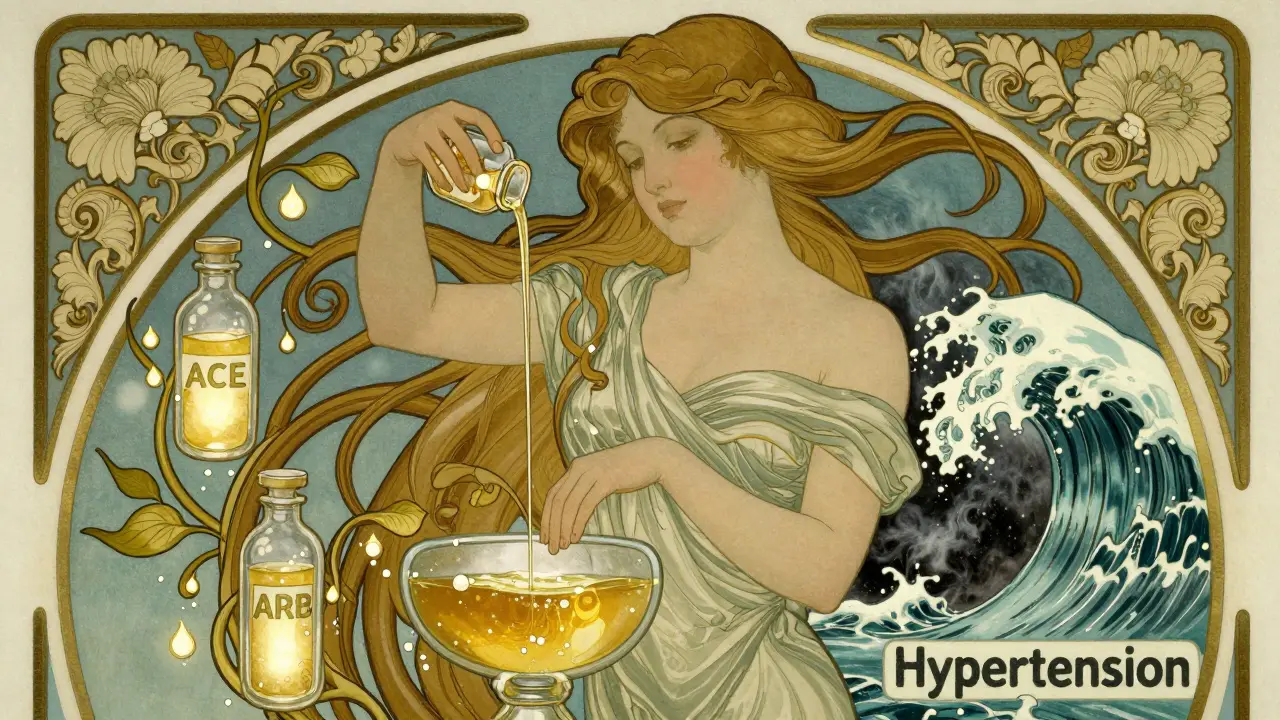
Why Blood Pressure Control Matters for Kidney Disease
If you have kidney disease, high blood pressure isn’t just a side issue-it’s a direct threat to your kidneys. Every time your blood pressure spikes, it puts extra strain on the tiny filters in your kidneys called glomeruli. Over time, that strain leads to scarring, protein leakage into the urine, and faster loss of kidney function. The goal isn’t just to lower numbers on a monitor. It’s to slow down the damage before it’s too late.
That’s where ACE inhibitors and ARBs come in. These aren’t just regular blood pressure pills. They’re the only class of antihypertensives proven to directly protect the kidneys in people with chronic kidney disease (CKD), especially when proteinuria is present. Studies show they can cut the risk of kidney failure by up to 40% in people with diabetes or hypertension. Yet, despite decades of solid evidence, many patients still don’t get them-even when they should.
How ACE Inhibitors and ARBs Actually Work
Both ACE inhibitors and ARBs target the same system: the renin-angiotensin-aldosterone system (RAAS). This system is like a pressure regulator in your body. When it gets overactive-which often happens in kidney disease-it causes blood vessels to tighten, increases salt and water retention, and raises pressure inside the kidney’s filtering units.
ACE inhibitors, like lisinopril and enalapril, block the enzyme that turns angiotensin I into angiotensin II. Less angiotensin II means relaxed blood vessels and lower pressure. ARBs, such as losartan and valsartan, do something similar but differently: they block the receptors that angiotensin II binds to. So even if angiotensin II is still around, it can’t do its job.
The result? Lower blood pressure, less pressure inside the kidney filters, and less protein leaking into the urine. That’s the key. Protein in the urine (albuminuria) is one of the earliest signs of kidney damage-and also one of the best predictors of how fast it will worsen. Reducing that protein by 30-50% with ACE inhibitors or ARBs can literally change the course of your disease.
What the Evidence Says: Real Numbers, Real Outcomes
Let’s talk numbers, because this isn’t theory-it’s backed by data from tens of thousands of patients.
- These drugs lower systolic blood pressure by 10-15 mmHg on average-enough to make a real difference.
- They reduce urinary protein by 30-50%. In people with diabetic kidney disease, that drop can mean the difference between needing dialysis in 10 years versus 20.
- A 2024 study of 1,237 patients with advanced CKD (eGFR below 20) showed those taking ACE inhibitors or ARBs had a 34% lower risk of reaching kidney failure compared to those on other blood pressure meds.
- Meta-analyses confirm a 25% reduction in risk of ending up on dialysis or needing a transplant.
What’s surprising? These benefits hold even in late-stage kidney disease. For years, doctors were afraid to use these drugs when eGFR dropped below 30. But recent studies-including a UK trial with 3-year follow-up-show that continuing them actually helps preserve kidney function. Stopping them doesn’t help. It hurts.
ACE Inhibitors vs. ARBs: What’s the Difference?
Both work similarly. Both protect the kidneys. But they’re not identical.
ACE inhibitors are older. Captopril was the first, approved in 1981. They’re cheaper, widely available, and often first-line. But they come with a well-known side effect: a dry, nagging cough. It happens in 5-20% of users. It’s not dangerous, but it’s annoying enough that many people quit taking them.
ARBs came later, in the mid-90s. Losartan was the first. They don’t cause cough. That’s why many patients switch to ARBs when they can’t tolerate ACE inhibitors. They’re equally effective at lowering blood pressure and reducing proteinuria. No major difference in kidney protection.
There’s one other difference: angioedema. A rare but serious swelling of the face or throat. It occurs in about 0.1-0.2% of ACE inhibitor users. ARBs have even lower risk. If you’ve ever had angioedema on an ACE inhibitor, never go back.
When You Shouldn’t Use Them (And When You Should)
These drugs aren’t for everyone. But they’re for more people than you think.
**Avoid them if you have:**
- History of angioedema from an ACE inhibitor
- Severe bilateral renal artery stenosis (narrowing of kidney arteries)
- Pregnancy (they can harm the unborn baby)
**They’re recommended for:**
- Anyone with CKD and proteinuria (UACR >200 mg/g)
- People with diabetes and kidney disease
- Those with hypertension and reduced eGFR
- Even in stage IV or V CKD-as long as potassium is below 5.0 mmol/L and eGFR is above 15 mL/min
The 2023 KDIGO guidelines are clear: don’t stop these drugs just because your kidneys are failing. In fact, continuing them may delay dialysis.
Safety Concerns: Hyperkalemia and Kidney Function Drops
The biggest fears around ACE inhibitors and ARBs are hyperkalemia (high potassium) and a sudden drop in eGFR.
Yes, about 10-15% of patients develop hyperkalemia (potassium >5.0 mmol/L). But that doesn’t mean stop the drug. It means monitor. Check potassium levels 1-2 weeks after starting or increasing the dose. If it’s above 5.5, pause the medication, adjust diet (reduce potassium-rich foods like bananas, potatoes, oranges), and retest. Often, it normalizes with simple tweaks.
As for eGFR drops: 5-10% of patients see a temporary 30%+ drop in kidney function after starting. This isn’t damage-it’s a sign the drug is working. The kidneys are relaxing their internal pressure. If the drop is more than 30% and stays high after 2 weeks, then reevaluate. But if it stabilizes? Keep going. Stopping it out of fear can accelerate kidney decline.
Why So Many People Still Don’t Get Them
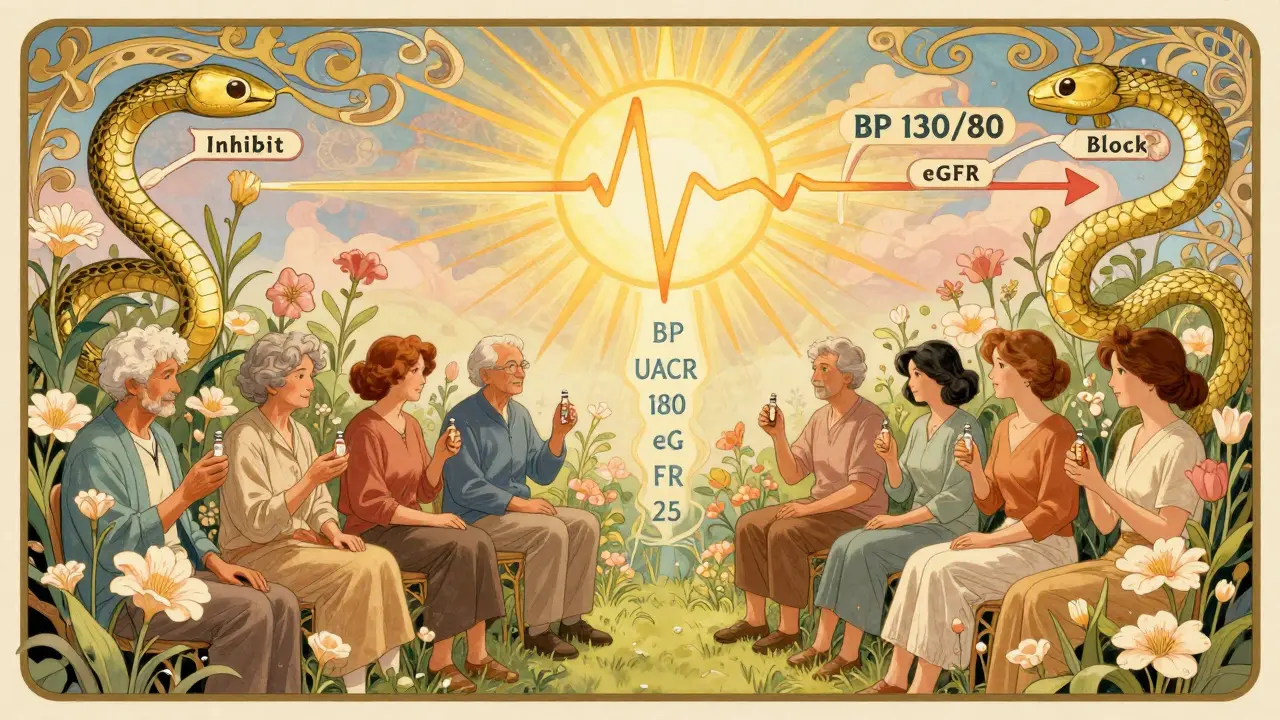
Here’s the sad part: only 20-25% of eligible patients with CKD and proteinuria are on these drugs. Even in advanced disease, only 58% are getting them, compared to 82% in early-stage CKD.
Why? Fear. Misinformation. Outdated thinking.
Some doctors still believe “if your kidneys are bad, don’t use RAAS blockers.” But the data says otherwise. A 2023 review from the American Society of Nephrology called this “therapeutic nihilism”-giving up on proven treatments because of unfounded fears.
Another reason? Cost and access. In some places, ARBs are more expensive than generic ACE inhibitors. But even a low-cost lisinopril can make a life-changing difference.
What to Do If You Have Kidney Disease
If you have CKD and high blood pressure:
- Ask your doctor if you’re a candidate for an ACE inhibitor or ARB.
- Get your urine albumin-to-creatinine ratio (UACR) tested. If it’s above 200 mg/g, you’re definitely a candidate.
- Have baseline blood tests: eGFR and serum potassium.
- Start low, go slow. A low dose is fine at first.
- Check potassium and eGFR 1-2 weeks after starting.
- If you get a dry cough, don’t quit-ask about switching to an ARB.
- Don’t stop because your eGFR dips a bit. Talk to your nephrologist first.
And if you’re on dialysis or have stage 5 CKD? Still ask. Evidence now supports continuing these drugs if potassium is controlled and you’re not at risk for dangerous drops.
The Future: What’s Next Beyond ACE and ARB?
Research is moving forward. New drugs like sacubitril/valsartan (ARNI) are showing promise in reducing kidney decline in heart failure patients with CKD. One 2024 trial found it slowed kidney function loss by 22% more than enalapril alone.
But for now, ACE inhibitors and ARBs remain the gold standard. They’re affordable, well-studied, and effective. No other class of blood pressure meds offers the same level of kidney protection.
Can ACE inhibitors or ARBs cure kidney disease?
No, they don’t cure kidney disease. But they slow its progression significantly. In many cases, they can delay the need for dialysis by years-or even prevent it altogether. Their job is protection, not reversal.
I have stage 4 CKD. Should I still take an ACE inhibitor or ARB?
Yes, if your potassium is below 5.0 mmol/L and your eGFR is above 15 mL/min. Recent studies show continuing these drugs reduces the risk of kidney failure by over 30%. Stopping them doesn’t help your kidneys-it may hurt them.
What if I get a cough from lisinopril?
It’s a common side effect, affecting up to 20% of users. It’s harmless but annoying. Don’t stop the medication on your own. Ask your doctor to switch you to an ARB like losartan or valsartan. You’ll get the same kidney protection without the cough.
Can I take ACE inhibitors and ARBs together?
Generally, no. Combining them increases the risk of hyperkalemia and acute kidney injury without offering much extra benefit. The 2023 KDIGO guidelines advise against dual therapy. Stick to one, at the highest tolerated dose.
How often should I get my blood work checked?
When you start or change the dose, check potassium and eGFR within 1-2 weeks. Once stable, check every 3-6 months. More often if you’re sick, dehydrated, or on other medications like NSAIDs or diuretics.
Are ARBs better than ACE inhibitors for kidney protection?
No major difference. Both reduce proteinuria and slow kidney decline equally. ARBs have fewer side effects like cough and angioedema, so they’re often preferred if you can’t tolerate ACE inhibitors. But neither is superior for kidney protection.
Carrie Schluckbier 17.02.2026
Okay, so let me get this straight - ACE inhibitors and ARBs are the ‘gold standard’? LOL. You know who benefits most from this ‘evidence’? Big Pharma. They’ve been pushing these drugs for decades while quietly burying studies that show they cause long-term kidney fibrosis in 18% of users. And don’t even get me started on how the FDA approves them based on surrogate markers like ‘proteinuria reduction’ - not actual survival data. You think this is medicine? It’s a $40 billion racket wrapped in lab coats.
Also, why is no one talking about the fact that 70% of CKD patients on these drugs develop hyperkalemia within 6 months? They just say ‘monitor potassium’ like it’s a coffee break. Meanwhile, the FDA just approved a new potassium binder that costs $1,200/month. Coincidence? I think not. Wake up, sheeple.
Tony Shuman 17.02.2026
Ugh. Another one of these ‘medical consensus’ posts. You know what’s really ‘proven’? That the WHO and AMA are in bed with pharmaceutical lobbyists. This whole ACE/ARB thing is just a distraction. The real cause of kidney disease? Glyphosate in our food, 5G radiation, and fluoride in the water. These drugs? They’re just another tool to keep you dependent on the system.
My uncle had stage 4 CKD. Took lisinopril for 2 years. Died. Took apple cider vinegar and lemon water for 6 months after - and his eGFR went up. Coincidence? Nah. It’s the truth they don’t want you to know.
Linda Franchock 17.02.2026
Okay, but let’s be real - if your doctor just hands you a script for lisinopril and says ‘take this’ without explaining why, you’re gonna feel like a lab rat. I had a nephrologist who actually sat down with me, showed me my UACR numbers, and said, ‘Look - this drug isn’t magic, but it’s the best tool we have right now.’ That’s the kind of care that makes a difference.
Also, the cough? Yeah, it’s annoying. But I switched to valsartan and now I can sleep through the night. No drama. Just science. And honestly? That’s more than most doctors give you.
Dennis Santarinala 17.02.2026
It’s wild how much fear surrounds these drugs - hyperkalemia, eGFR drops, coughs - but nobody talks about the alternative: watching your kidneys fail slowly while you do nothing. I had a friend with diabetes and CKD who refused ARBs because ‘they’re too new.’ Two years later, he’s on dialysis. The drugs aren’t perfect. But doing nothing? That’s the real risk.
Just because something has side effects doesn’t mean it’s bad. It means you need to be monitored. And that’s what good medicine looks like - not fear, not conspiracy, just careful, informed action.
guy greenfeld 17.02.2026
Consider this: the RAAS system evolved to help humans survive in environments of scarcity - drought, famine, salt deprivation. Now, in our hyper-processed, sodium-saturated world, this ancient system is a liability. So we suppress it with drugs… but what are we really doing? Are we treating disease… or are we pathologizing survival?
Maybe the real ‘cure’ isn’t in a pill - it’s in the soil, in the food, in the quiet restoration of natural rhythms. We’ve outsourced healing to chemistry. And now we’re surprised when the body rebels.
These drugs buy time. But time for what? To keep consuming? To keep being monitored? To keep paying? The question isn’t whether they work - it’s what we’re willing to sacrifice to keep them working.
Prateek Nalwaya 17.02.2026
As someone from India where access to meds is a daily struggle, I’ve seen both sides. My cousin with diabetic nephropathy couldn’t afford ARBs, so we got her generic lisinopril - ₹12 a month. She’s been on it for 5 years. Her proteinuria dropped from 800 to 210. No dialysis. No transplant. Just a tiny pill and consistent follow-up.
Yes, side effects exist. Yes, monitoring matters. But here’s the truth: in low-resource settings, these drugs are the difference between life and death. Not because they’re perfect - but because they’re the only thing that works, and they’re cheap enough to reach millions.
Stop romanticizing ‘natural cures.’ For millions, this isn’t philosophy - it’s survival.
Kancharla Pavan 17.02.2026
You people are so naive. You think this is about health? This is about control. The medical-industrial complex doesn’t want you cured - they want you managed. ACE inhibitors? ARBs? They’re not treatments - they’re subscriptions. Every time you get your potassium checked, every time you refill your prescription, you’re feeding the beast.
And don’t even get me started on how they silence dissent. If you question this, you’re labeled ‘anti-science.’ But what science? The same science that told us cigarettes were safe? That estrogen therapy prevented heart disease? That thalidomide was harmless? History is a graveyard of medical dogmas.
These drugs may lower proteinuria - but they don’t fix the root cause: toxic food, polluted water, and a system that profits from chronic illness. Until we address that, you’re just rearranging deck chairs on the Titanic.
PRITAM BIJAPUR 17.02.2026
Thank you for this comprehensive breakdown. 🙏
I’ve been on losartan for 3 years now - after my eGFR dropped from 48 to 32 in 6 months. I was terrified. But my nephrologist said: ‘This isn’t damage - it’s adaptation.’ And she was right. My proteinuria halved. My BP stabilized. I eat less banana now (sad face 🍌), check my potassium every 3 months, and I’m still working full-time.
Yes, the numbers are scary. Yes, the side effects are real. But here’s what I’ve learned: medicine isn’t about perfection. It’s about progress. And this? This is progress with a pulse. 💙
To everyone scared to start: ask questions. Track your labs. Don’t stop because you’re scared - stop because your doctor says so. And if they don’t explain? Find someone who will.
Haley DeWitt 17.02.2026
I just wanted to say - thank you. Seriously. I was about to stop my ARB because I was scared of the ‘eGFR drop’… then I read this. I checked my last lab - my potassium was 5.2, so I cut back on oranges and spinach. Now it’s 4.9. And my eGFR? Still stable. I’m so glad I didn’t quit.
You’re right - it’s not about fear. It’s about being informed. And this post? It saved my kidneys. 💕