
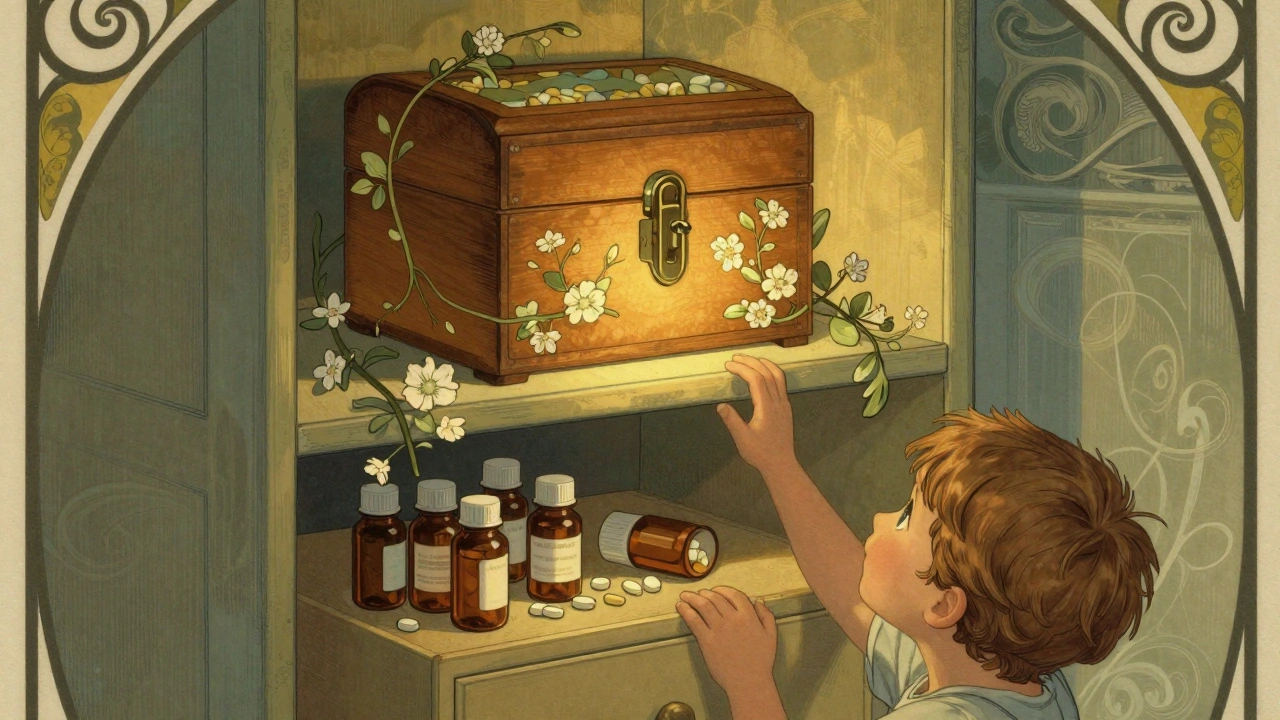
Every year, thousands of people die from accidental overdoses-not from strangers, not from illegal drugs, but from pills sitting in a kitchen cabinet, a nightstand, or a medicine chest anyone can reach. The truth is, if you’re storing high-risk medications like opioids, benzodiazepines, or sleep aids in an unlocked box, you’re putting your family, friends, and even visitors at risk. This isn’t theoretical. In 2020, over 16,000 overdose deaths in the U.S. were linked to prescription opioids, and nearly half of people who misuse these drugs get them from friends or family members’ unsecured medicine cabinets.
Why Storage Matters More Than You Think
Most people assume that if they’re taking their medication as prescribed, they’re safe. But safety isn’t just about how you use it-it’s about who else can get to it. Children, teens, and even well-meaning relatives can accidentally-or intentionally-take the wrong pill. A toddler pulling open a drawer, a teenager experimenting out of curiosity, or a relative in crisis can turn a prescription into a tragedy.
The CDC reports that over 60,000 children visit emergency rooms each year because they swallowed medication they found at home. And it’s not just kids. In 2021, the American Association of Poison Control Centers found that 89% of pediatric exposures happened because medications were stored in easily accessible places-like on a dresser, in a purse, or under the sink.
Storing high-risk medications securely isn’t about distrust. It’s about responsibility. Every unsecured pill is a potential overdose waiting to happen.
What Counts as a High-Risk Medication?
Not all prescriptions need the same level of security. But if your medication falls into one of these categories, it’s high-risk:
- Opioids (oxycodone, hydrocodone, fentanyl patches, morphine)
- Benzodiazepines (alprazolam, diazepam, clonazepam)
- Sleep aids (zolpidem, eszopiclone)
- Stimulants (adderall, methylphenidate)
- Any medication with a black box warning from the FDA
These drugs are powerful. Even a single pill can be deadly to someone who hasn’t built up a tolerance. Fentanyl patches, for example, can kill a child with just one dose-even if it’s been used. And while some people think, “I only have a few pills left,” that’s exactly when they’re most dangerous. A half-empty bottle looks like an invitation.
The Gold Standard: Locked, Original, and Out of Reach
There are three non-negotiable rules for storing high-risk medications:
- Keep them in their original container with the label intact. This isn’t just for your own safety-it’s for emergency responders. If someone overdoses, paramedics need to know exactly what was taken, the dosage, and the time it was last taken. Transferring pills to a pill organizer or a random bottle removes critical information and makes treatment harder.
- Use a locked container. A simple lockbox is enough. Look for one rated to ANSI Grade 2 standards-this means it can resist forced entry for at least 10 minutes. Basic models start at $15. Biometric or keypad lockboxes cost up to $150, but even a cheap padlock on a small box works. The CDC says locked storage prevents 92% of unauthorized access attempts.
- Store them at least 4 feet off the ground. Children under 6 can reach up to 36 inches. A nightstand? Too low. A bathroom cabinet? Too accessible. A top shelf in a closet, a locked cabinet in a bedroom, or a high drawer in a dresser are better options.
And don’t forget the child-resistant cap. The Poison Prevention Packaging Act of 1970 requires these caps for a reason. But they only work if they’re snapped shut. If you’re leaving the cap loose because it’s hard to twist, you’re undoing the protection.
What Doesn’t Work
Many people think they’re doing enough by:
- Putting meds in a drawer-without locking it
- Using a pill organizer without locking the container
- Keeping them in the bathroom (where kids can reach them, and humidity ruins pills)
- Leaving them on a kitchen counter for convenience
These are all common mistakes-and they’re dangerous. A 2019 FDA study found that 68% of adults remove medications from original packaging for convenience. That’s a huge risk. Original containers have tamper-evident seals, dosage info, and expiration dates. Once you move pills out, you lose all that.
Also, don’t rely on “just keeping them out of sight.” Kids are curious. Teens are resourceful. A locked box isn’t about hiding-it’s about blocking access entirely.
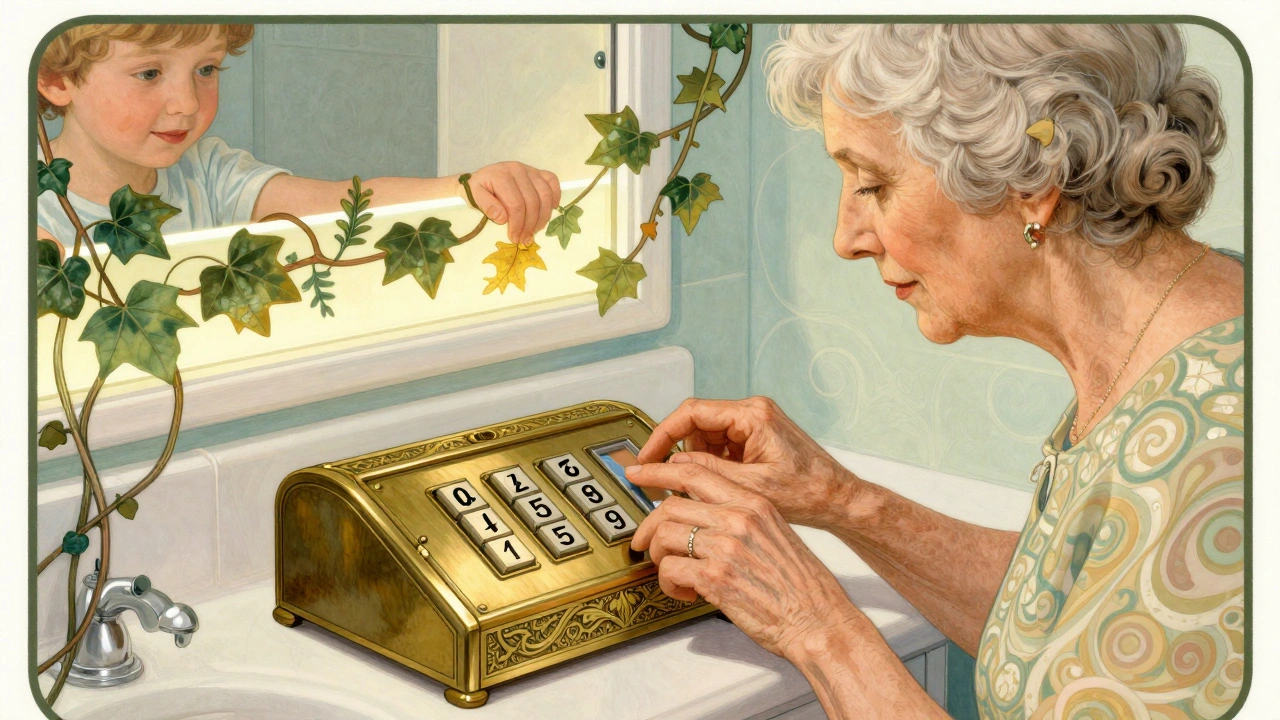
What About Accessibility? I Can’t Open Child-Proof Caps
If you’re elderly, have arthritis, or have trouble with fine motor skills, child-resistant caps and lockboxes can feel impossible. You shouldn’t have to choose between safety and access.
There are solutions:
- Ask your pharmacist for a non-child-resistant cap. It’s legal. You just need to request it in writing or verbally. Most pharmacies will comply if you sign a form acknowledging the risk.
- Use a lockbox with an emergency code. Products like the Med-ic Safe Locking Pill Organizer ($34.99) open with a 4-digit code, not a key or twist. You can set it to your birth year or a simple code you won’t forget.
- Ask a family member to manage access. If you’re comfortable, have a trusted person hold the key or code and help you take your pills on schedule.
Some lockboxes even have voice prompts or large-button interfaces designed for seniors. You don’t have to struggle alone.
Electronic Monitoring: Helpful, But Not Necessary
Smart pill dispensers like Hero Health or MedMinder can track when pills are taken, send alerts if someone opens the box early, and even notify family members. They’re great tools-but they’re expensive ($99-$149), require Wi-Fi, and can be confusing for older users.
According to a 2022 Duke University study, less than 5% of people using high-risk medications use these systems. For most, a simple lockbox is just as effective-and far more reliable.
Don’t feel pressured to buy tech. Focus on the basics first: locked, original, out of reach.
How to Set It Up in 30 Minutes
Here’s a simple 5-step plan you can do in under an hour:
- Inventory - Take out every prescription you have. Write down what they are, how many are left, and when they were prescribed. This takes 15-20 minutes.
- Transfer - Put every high-risk medication back into its original bottle. If you’ve already moved them, stop. Go back to the original. This takes 5-10 minutes.
- Buy a lockbox - Pick up a basic lockbox at Walmart, Target, or online. Look for “ANSI Grade 2” or “tamper-resistant.” Spend $15-$30. This takes 10-30 minutes.
- Choose a location - Find a spot at least 4 feet high, away from windows or easy access. A high closet shelf, a locked bedroom drawer, or a cabinet above the bathroom sink (if it’s out of reach) works.
- Track it - Every morning, take 2 minutes to check the count. Write it down: “42 tablets, 8:00 AM, Dec 10.” You don’t need an app. A sticky note on the lockbox is enough.
That’s it. You’ve cut your risk of accidental overdose by over 80%.
What If Someone Already Took a Pill?
If you suspect someone has taken medication that wasn’t prescribed to them, act immediately.
- Call Poison Help at 1-800-222-1222. It’s free, 24/7, and staffed by toxicology experts. In 2022, they handled over 2 million calls and resolved 92% without sending anyone to the ER.
- If the person is unconscious, not breathing, or turning blue, call 911 immediately. If you have naloxone (Narcan), use it. It’s safe, easy to use, and can reverse an opioid overdose in minutes.
- Keep the original pill bottle. Emergency responders need to know what was taken.
Don’t wait. Don’t hope it’s not serious. Time matters.
What About Disposal?
Don’t flush pills. Don’t throw them in the trash. Both are dangerous and environmentally harmful.
Use a drug take-back program. The DEA runs National Prescription Drug Take Back Day twice a year-in April and October. Over 985,000 pounds of medication were collected in 2022 alone. Find your nearest drop-off location at DEA.gov/takebackday.
If there’s no take-back event nearby, mix unused pills with coffee grounds or cat litter, seal them in a bag, and throw them in the trash. Remove or black out your name and prescription info from the bottle first.
Real Stories, Real Consequences
One Reddit user, u/PainPatient2021, shared: “My doctor never told me to lock up my oxycodone. My 16-year-old found them in my nightstand and overdosed-thank God Narcan worked.”
Another, u/SecureMom on Parenting Reddit, said: “The Walgreens lockbox saved my toddler from accessing grandma’s fentanyl patches-she pulled three drawers down trying to get it.”
These aren’t rare cases. They’re common. And they’re preventable.
Final Thought: This Isn’t Optional
Storing high-risk medications securely isn’t about being paranoid. It’s about being responsible. You wouldn’t leave a loaded gun in a drawer. You wouldn’t leave gasoline where a child could reach it. Prescription opioids and benzodiazepines are just as dangerous.
The CDC says secure storage is one of the most effective ways to prevent overdose. It’s low-cost, simple, and works. And if you’re reading this, you care enough to act. Start today. Lock it up. Keep it original. Keep it out of reach.
One locked box could save a life. Maybe even your own.
Levi Cooper 11.12.2025
This is why America's falling apart. People don't take responsibility anymore. Lock your meds? That's basic. If you can't even do that, don't have them in the first place. My grandfather took morphine for 20 years and never had a problem because he kept it locked up. You want safety? Stop being lazy.
Laura Weemering 11.12.2025
I mean... it's not just about storage, right? It's about the entire pharmacological industrial complex that normalizes dependency... and then blames the individual for not being 'responsible' enough... while the same corporations profit off the very systems that create the crisis... it's all so... deeply... symbolic...
Reshma Sinha 11.12.2025
This is so important!! Especially in households with kids or elderly. I just bought a lockbox after reading this-$22 at Target. Game changer. My mom’s arthritis meds were in a drawer... now they’re in a locked box on the top shelf. Peace of mind. 💪❤️
nikki yamashita 11.12.2025
Just locked my oxycodone tonight. Took 10 minutes. Best decision I’ve made all year.
Rob Purvis 11.12.2025
I appreciate the emphasis on original containers-so many people don’t realize how critical that is for ERs. Also, the 4-foot rule is genius. My niece tried to climb a dresser last year. Scared the hell out of me. Now everything’s in a locked cabinet above the fridge. Simple. Effective.
Stacy Foster 11.12.2025
This is all just a distraction. The real problem is the government letting Big Pharma flood neighborhoods with opioids. Lockboxes won’t stop a kid from getting pills from a dealer. They’re just making parents feel better while the system keeps exploiting people. This is performative safety. They want you to think you’re fixing it by buying a $20 box. Wake up.
Lawrence Armstrong 11.12.2025
I use the Med-ic Safe lockbox-works great. My dad has arthritis, and he loves the code lock. No keys, no twisting. And yeah, the sticky note trick? Genius. I write the count every morning. Took me 2 days to remember... now it’s automatic. 😊
Audrey Crothers 11.12.2025
I used to keep my anxiety meds on my nightstand. Then my cousin’s 12-year-old stayed over and found them. She took one. Just one. We didn’t know until she vomited at breakfast. I cried for an hour. Now everything’s locked. No excuses. 💔
sandeep sanigarapu 11.12.2025
Excellent guidance. In India, we rarely see such awareness. Perhaps this practice should be integrated into public health education. Simple, low-cost, high-impact. Thank you for the clarity.
Ashley Skipp 11.12.2025
Why are we even talking about this like its a new idea. Everyone knows you lock up your pills. If you dont you deserve what happens. No sympathy for people who leave drugs lying around like candy
Nathan Fatal 11.12.2025
There's a deeper layer here. We treat addiction as a moral failure when it's a neurological condition. But the solution isn't just locking pills-it's dismantling the stigma that prevents people from asking for help. A locked box prevents access, but compassion prevents addiction. Both matter.
Robert Webb 11.12.2025
I think it’s worth noting that this advice is most effective when it’s framed not as a burden, but as an act of love. I used to think locking my meds was distrustful-until I realized it was the most caring thing I could do for my teenage nephew who visits every weekend. He doesn’t know they’re there. That’s the goal. Not control. Protection. Quiet, consistent, unspoken care.
Adam Everitt 11.12.2025
i read this and thought... wow. i had no idea about the 4ft rule. i was putting mine in the bathroom cabinet. oops. also, i always thought the childproof caps were just a gimmick. turns out they actually work if you close them. who knew? 🤦♂️
wendy b 11.12.2025
This is precisely the kind of performative, middle-class, bourgeois safety theater that distracts from the systemic collapse of mental health infrastructure. You lock your pills? How noble. Meanwhile, your neighbor’s son is on fentanyl because Medicaid cut his therapy. Your lockbox doesn’t fix the system. It just makes you feel morally superior.