
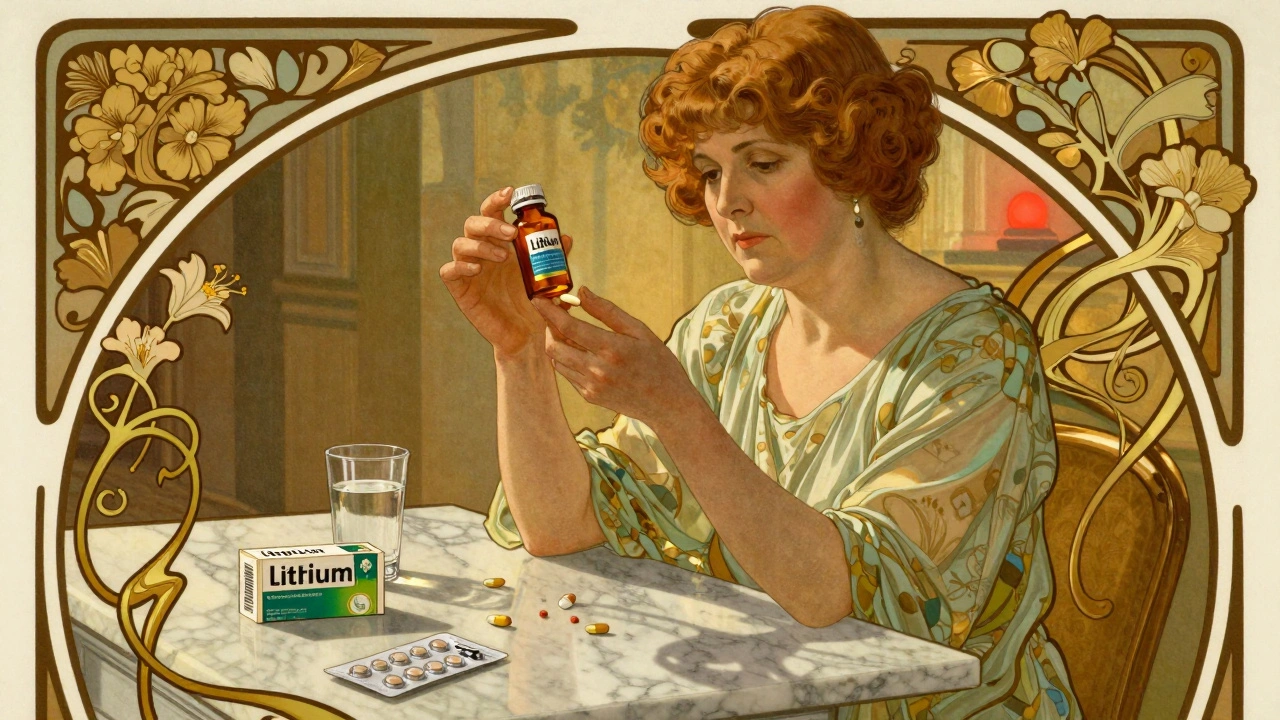
Lithium is one of the oldest and most effective mood stabilizers for bipolar disorder. But it’s also one of the most dangerous if not managed carefully. A tiny change in your body-whether from a common painkiller, a water pill, or even a hot day without enough water-can push lithium levels into the toxic range. This isn’t theoretical. People have died from it.
Why Lithium Is So Sensitive
Lithium doesn’t break down in your body. It’s filtered out by your kidneys, almost entirely unchanged. That means anything that affects how well your kidneys work will change how much lithium stays in your blood. Your kidneys are the gatekeepers. If they slow down, lithium builds up. Even a small dip in kidney function can turn a safe dose into a dangerous one. The safe range is narrow: between 0.6 and 1.2 mmol/L. Go above that, and you risk toxicity. Below it, and the medication might not work. There’s no room for guesswork. That’s why regular blood tests aren’t optional-they’re life-saving.NSAIDs: The Silent Risk
Non-steroidal anti-inflammatory drugs (NSAIDs) like ibuprofen, naproxen, and diclofenac are everywhere. People take them for headaches, back pain, arthritis. But if you’re on lithium, these can be risky. NSAIDs reduce blood flow to the kidneys by blocking prostaglandins-chemicals that help keep kidney function steady. Less blood flow means less lithium gets cleared. Studies show NSAIDs can increase lithium levels by 25% to 60%, depending on the drug. Indomethacin is the worst offender, followed by ibuprofen. Celecoxib is a bit safer, but still not risk-free. The rise in lithium levels usually happens within the first week of taking an NSAID. That’s why many doctors warn against even short-term use. One fatal case in New Zealand involved a 72-year-old woman on lithium and an ACE inhibitor. She took an NSAID for joint pain. Her lithium levels weren’t checked for months. She died from toxicity.Diuretics: Water Pills That Can Sink You
Diuretics are meant to help your body get rid of extra fluid. But with lithium, they do the opposite-they trap it. Thiazide diuretics like hydrochlorothiazide are the biggest problem. They cause lithium levels to jump 25% to 50% within 7 to 10 days. That’s fast. And it’s not just a theory. Real patients have ended up in the hospital with tremors, confusion, and vomiting because of this combo. Loop diuretics like furosemide (frusemide) are less dangerous but still risky. They can raise lithium levels by 10% to 25%. Potassium-sparing diuretics like spironolactone? The data is mixed. Some studies show little effect, others show spikes. Don’t assume they’re safe. And here’s something most people don’t know: herbal diuretics-those “natural” weight-loss teas or supplements-can be just as dangerous. They’re not regulated. No one checks their strength. But they still cause dehydration and reduce kidney clearance. One case report described a woman who took a “detox” tea and ended up with lithium toxicity.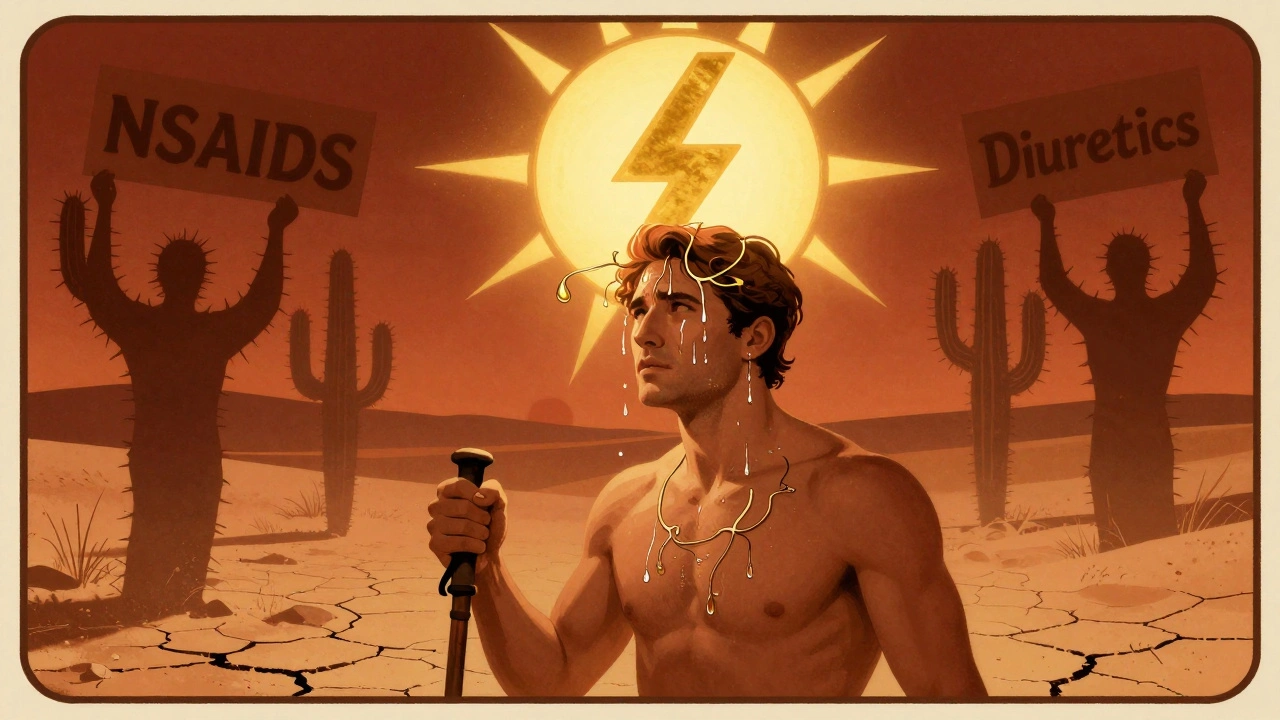
Dehydration: The Hidden Trigger
You don’t need to be on a drug to put yourself at risk. Just being dehydrated can push lithium into toxic territory. Lithium floats in your blood. If you lose water-through sweat, fever, vomiting, diarrhea, or just not drinking enough-your blood gets thicker. Lithium concentration rises. Even a 2% to 3% drop in body water can increase lithium levels by 15% to 25%. This is why travel is a red flag. Flying long-haul? The cabin air is dry. You’re not drinking enough. You’re sitting still. Your kidneys slow down. Lithium builds up. Same with hot weather. If you’re in Perth in summer and you’re out gardening or walking without fluids, you’re playing Russian roulette with your meds. Even something as simple as skipping salt can make things worse. Your body holds onto lithium when sodium is low. Eat less salt? Lithium goes up. Eat more salt? Lithium goes down. A change of 20-30 mmol of sodium per day can shift lithium levels by 10% to 20%. That’s the difference between safe and toxic.Who’s at Highest Risk?
Not everyone on lithium is equally vulnerable. Some people are sitting on a ticking clock. - People over 65: Their kidneys don’t work as well. They’re 3.2 times more likely to have lithium toxicity. - Those with kidney disease: Even mild chronic kidney disease doubles the risk. - People with heart failure: Poor circulation means less blood flow to the kidneys. - Anyone on multiple interacting drugs: Combining NSAIDs, diuretics, and ACE inhibitors? That’s a triple threat. - Those with poor fluid intake: Whether from forgetfulness, nausea, or fear of frequent bathroom trips, low fluid intake is a silent killer.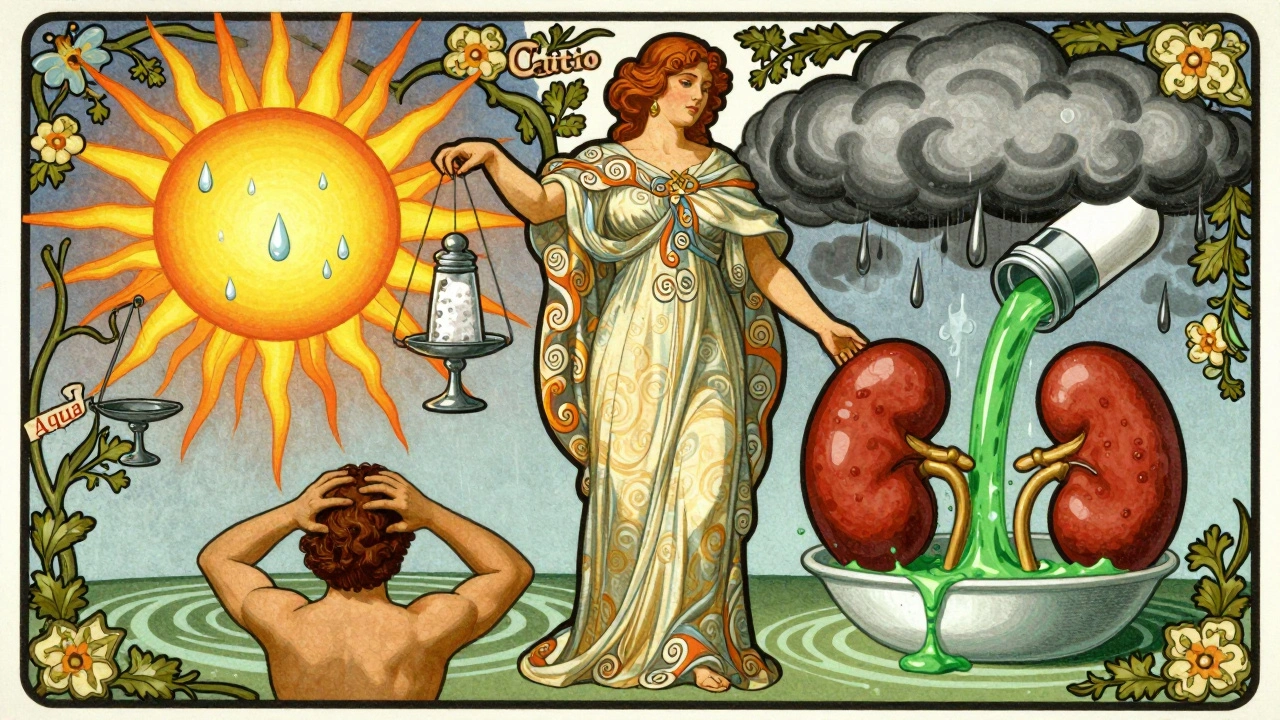
What to Do If You’re on Lithium
You don’t have to live in fear. But you do need to be smart.- Avoid NSAIDs if you can. Use paracetamol (acetaminophen) for pain instead. It doesn’t affect lithium.
- Never start a new diuretic without talking to your doctor. If you’re prescribed one, ask: “Will this interact with my lithium?”
- Drink water daily. Aim for 1.5 to 2 liters, more if you’re active or it’s hot. Don’t wait until you’re thirsty.
- Keep your salt intake steady. Don’t suddenly go low-sodium unless your doctor tells you to. Don’t binge on salty food either-balance matters.
- Get your lithium levels checked after any change. If you start a new medicine, get sick, or travel, ask for a blood test within 7-14 days.
- Know the warning signs. Diarrhea, trembling hands, dizziness, drowsiness, blurred vision, or ringing in your ears? These aren’t just side effects. They’re red flags. Call your doctor immediately.
What Doctors Should Be Doing
Good care means more than just writing a prescription. It means follow-up. - Lithium levels should be checked weekly for the first month after starting an NSAID or diuretic. - After that, check every 3 months-or more often if you’re elderly or have other health issues. - If you’re on long-term lithium, your doctor should monitor your kidney function (creatinine, eGFR) at least once a year. - Electronic systems should flag interactions. But too often, alerts are ignored. Don’t rely on technology. Talk to your doctor.The Bottom Line
Lithium works. It saves lives. But it’s not a drug you can take on autopilot. The risks from NSAIDs, diuretics, and dehydration are real, well-documented, and preventable. You don’t need to avoid all medications. You don’t need to live in a bubble. You just need to be informed. Tell your doctor you’re on lithium before taking anything new-even over-the-counter stuff. Drink water every day. Watch your salt. Know the signs of trouble. A simple conversation with your doctor and a few lifestyle adjustments can keep you safe. Ignoring them? That’s when things go wrong.Can I take ibuprofen if I’m on lithium?
It’s not recommended. Ibuprofen can raise lithium levels by 25% to 40%, especially if you’re older or dehydrated. If you need pain relief, use paracetamol (acetaminophen) instead. If you must take ibuprofen, your doctor should check your lithium level within a week and monitor you closely.
What happens if I get sick with vomiting or diarrhea while on lithium?
Stop taking lithium until you’re back to normal, and call your doctor. Vomiting and diarrhea cause dehydration, which increases lithium concentration in your blood. Even a day or two of illness can push you into toxicity. Don’t wait for symptoms like tremors or confusion-act early.
Are herbal diuretics safe with lithium?
No. Herbal diuretics-like dandelion root, green tea extract, or weight-loss teas-are not regulated and can cause dangerous lithium spikes. They work the same way as prescription diuretics: by reducing fluid and slowing kidney clearance. Many people don’t realize they’re taking them. Always check supplement labels and tell your doctor what you’re using.
Does drinking more water lower lithium levels?
Yes, but only if you’re dehydrated. Drinking enough water helps your kidneys flush out lithium normally. If you’re already well-hydrated, drinking extra water won’t lower your lithium level further. But if you’re dehydrated-even mildly-drinking fluids can help bring levels back down. The goal is consistency, not overhydration.
How often should lithium levels be checked?
When you first start lithium, levels are checked weekly until stable. After that, every 3 to 6 months is typical. But if you start a new medication, get sick, change your diet, or travel, get tested within 7 to 14 days. Elderly patients or those with kidney issues should be tested more often-every 2 to 3 months.
Can lithium cause permanent kidney damage?
Yes, especially after repeated episodes of toxicity or long-term use in older adults. Lithium can cause chronic kidney disease over time. Severe toxicity can lead to permanent damage. That’s why keeping levels in the safe range and avoiding interactions is so important-it’s not just about feeling well now, but protecting your kidneys for the future.
Nikhil Pattni 9.12.2025
Yo, I’ve been on lithium for 12 years and I still see people popping ibuprofen like candy. Bro, it’s not a snack. I once took it for a headache and ended up in the ER with tremors and blurry vision. My doc said my lithium level jumped to 1.8. That’s toxic territory. They pumped my stomach and I had to get IV fluids for 8 hours. Now I keep paracetamol in my bag like it’s my life insurance. Also, don’t even get me started on those ‘detox’ teas. I saw a girl on Reddit take one and crash. Her kidneys were fried. Seriously, if you’re on lithium, treat your body like a nuclear reactor. One wrong move and boom. 😵💫
Arun Kumar Raut 9.12.2025
Hey, I just want to say thanks for writing this. My dad’s on lithium and I didn’t know any of this. I thought he just had to take his pill and that was it. Now I make sure he drinks water every hour, especially when it’s hot. I even put sticky notes on his water bottle. And I told him to never take any OTC meds without checking with his doctor. I’m not a doctor, but I know enough now to keep him safe. You saved my family some serious stress. 🙏
Ronald Ezamaru 9.12.2025
As a psychiatrist in the U.S., I see this over and over. Patients think ‘natural’ means safe. Dandelion root tea? It’s a diuretic. Plain and simple. And it’s not regulated-so one batch might have 5x the potency of another. I had a patient last month who started a ‘cleansing’ supplement after watching a YouTube influencer. Two weeks later, she had confusion, slurred speech, and a lithium level of 1.9. She’s lucky she didn’t have a seizure. The myth that herbal = harmless is deadly. Always disclose everything. Even if you think it’s ‘just tea.’
Ryan Brady 9.12.2025
Lithium? That’s some communist medicine. We got better stuff in America. Why don’t they just use antipsychotics like everyone else? And why are we even talking about this like it’s rocket science? Just stop taking the damn pill if it’s too hard. People need to take responsibility. Also, who the hell drinks 2 liters of water a day? That’s just weird. I drink when I’m thirsty. End of story. 🇺🇸
Raja Herbal 9.12.2025
Oh wow, a whole article about lithium and dehydration. And I thought I was the only one who got called ‘the water guy’ by my friends because I carry a 2L bottle everywhere. 😏 Also, I once took a ‘natural energy booster’ that had green tea extract. My hands shook like I was having a seizure. Turns out, it was the lithium. Now I read every supplement label like it’s a legal contract. ‘Contains diuretic herbs?’ Nope. Not today, Satan.
Rich Paul 9.12.2025
lithium is so finicky bro. like, one day u r fine, next day u take advil for a headache and suddenly ur brain feels like mush. i had a friend who got hospitalized after taking naproxen for his back pain. he thought it was ‘just a little’ and that his doc ‘wouldnt care’. lol. nope. he ended up with renal failure for a week. the doc said his lithium level was 2.1. that’s like, 2x the max. also, dont even get me started on salt. i used to eat super low sodium ‘for health’ and my levels went up. then i started eating pretzels and it stabilized. weird as hell. but real. 🤯
Delaine Kiara 9.12.2025
Okay, I just read this and I’m crying. My sister died from lithium toxicity. She was 34. She took ibuprofen for cramps and didn’t tell her doctor. She thought it was ‘safe’. She didn’t even know she was dehydrated-she was too busy working two jobs and sleeping 4 hours a night. Her last text to me was ‘I feel so weird’. I didn’t know what to do. She was gone in 48 hours. This post? It’s not just info. It’s a warning. Please. If you’re on lithium, tell everyone. Your doctor. Your friends. Your barista. Don’t let anyone else lose someone because they didn’t know.
Katie Harrison 9.12.2025
Thank you for the clarity. I’m a nurse in Vancouver, and I’ve seen too many cases where patients are discharged without adequate education on lithium safety. Especially in older adults with polypharmacy. I always hand out a one-page summary I made: ‘Lithium Do’s and Don’ts’. It includes: avoid NSAIDs, hydrate daily, check salt, monitor for tremor/dizziness, and always report new meds-even aspirin. I’ve had patients say, ‘I didn’t think it mattered.’ It does. It matters so much. Please, if you’re on lithium, don’t assume it’s ‘just a pill.’ It’s a precision tool. Treat it that way.
Mona Schmidt 9.12.2025
One thing that’s rarely mentioned: lithium levels can be affected by seasonal changes. In winter, people drink less water, sweat less, and sometimes eat more salt to combat the cold. In summer, dehydration spikes. I’ve tracked patients’ levels over a year and seen a 15% fluctuation just from climate and activity patterns. That’s why I recommend quarterly testing regardless of meds. Also, if you’re traveling across time zones, your circadian rhythm affects kidney filtration. I’ve had patients with toxicity after a flight to Asia without adjusting fluid intake. It’s not just drugs-it’s lifestyle rhythm. Pay attention to the patterns.
Guylaine Lapointe 9.12.2025
It’s outrageous that this isn’t mandatory education for every patient prescribed lithium. Why are we leaving people to Google this? Why aren’t pharmacies required to print a warning label on lithium prescriptions? I’ve seen people buy NSAIDs next to their lithium bottle and not think twice. This isn’t just negligence-it’s systemic failure. And the fact that herbal supplements aren’t regulated while pharmaceuticals are? That’s a joke. Someone needs to sue the FDA. Someone needs to make this a public health campaign. This isn’t ‘personal responsibility’-it’s a public safety crisis. I’m sharing this everywhere.