

Every year, millions of people in the U.S. take medications they don’t fully understand. They might not know the side effects, how to store them, or what foods to avoid. That’s where MedlinePlus Drug Information comes in - a free, no-advertisement, government-backed resource that turns confusing drug labels into clear, easy-to-read safety guides.
What Is MedlinePlus Drug Information?
MedlinePlus Drug Information is run by the National Library of Medicine, part of the National Institutes of Health (NIH). It’s not a pharmacy, not a marketing site, and not a place for ads. It’s a trusted source built for regular people - not doctors or pharmacists - to find accurate, plain-language information about prescription drugs, over-the-counter medicines, and even herbal supplements.
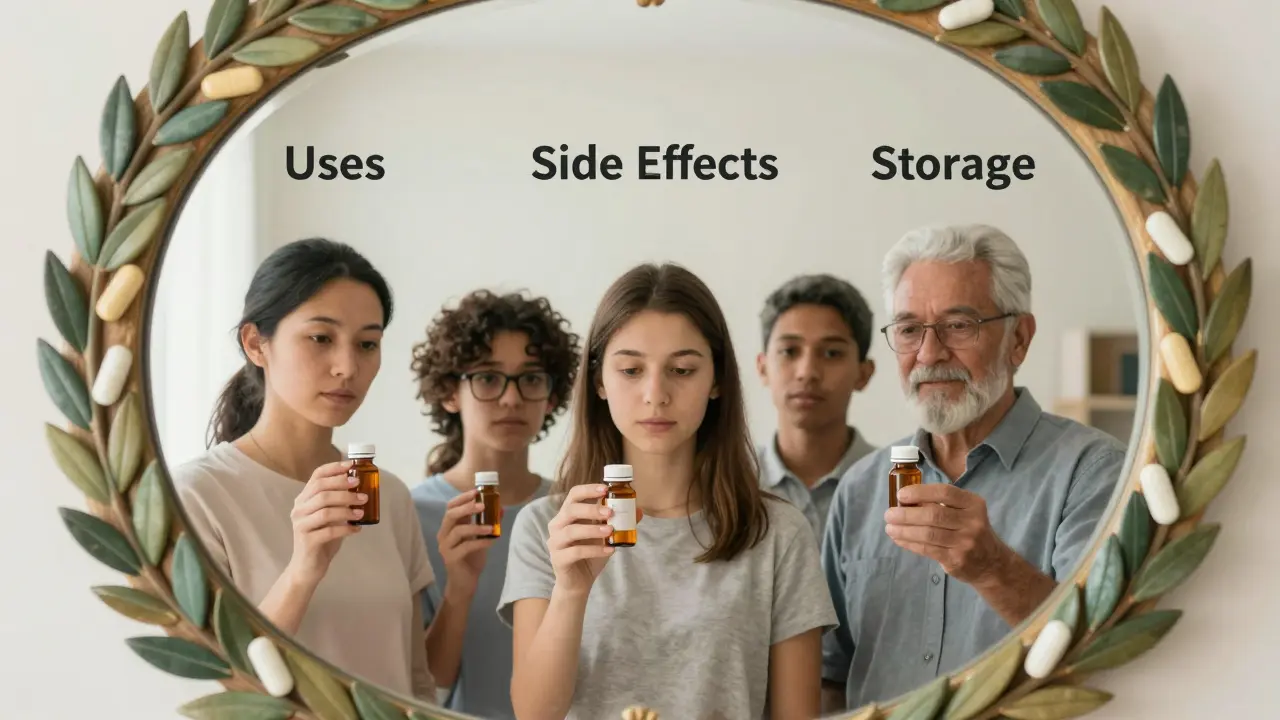
Every drug page includes the same simple structure: what it’s used for, how to take it, what to watch out for, what to do if you miss a dose, possible side effects, what happens in an overdose, and how to store it safely. Each page shows the exact date it was last updated, so you always know you’re getting current info.
Why It’s Different From WebMD or Drugs.com
Most health websites you find through a Google search make money from ads. They might push certain brands, link to online pharmacies, or show sponsored content. MedlinePlus doesn’t do any of that. It’s funded by taxpayers and has a strict rule: no ads, no promotions, no commercial influence.
Compare that to WebMD or Drugs.com. They offer pill identifiers, drug interaction checkers, and user reviews. But those tools can be misleading. A pill identifier might misread a generic version. A user review might say a drug caused nausea - but that’s just one person’s experience. MedlinePlus skips the noise. It gives you facts from authoritative sources like the American Society of Health-System Pharmacists (ASHP), reviewed by experts and checked for accuracy.
It doesn’t have flashy tools. But it does have something more important: trust.
How to Find What You Need
Using MedlinePlus is simple. Go to medlineplus.gov and click on “Drugs and Supplements” at the top. You’ll see two options: search by generic name or brand name. Type in “ibuprofen” or “Advil” - either works. The site even corrects typos. If you type “oxycodin,” it’ll suggest “oxycodone.”
Or if you prefer browsing, scroll down and click the alphabet. Find your drug by its first letter. No pop-ups. No sign-ups. No distractions.
Each drug page has a light blue navigation box on the right. Click any section - “Side Effects,” “Precautions,” “Storage” - and you jump right there. No scrolling through pages of text. Everything is clearly labeled and easy to find.
What’s Actually on the Page?
Let’s say you’re looking up metformin, a common diabetes medication. Here’s what you’ll see:
- Uses: “Used to treat type 2 diabetes. Helps control blood sugar.”
- How to take it: “Take by mouth with meals to reduce stomach upset. Do not crush or chew extended-release tablets.”
- Precautions: “Tell your doctor if you have kidney problems. Avoid alcohol - it can increase the risk of lactic acidosis.”
- Side effects: “Common: nausea, diarrhea, stomach pain. Rare but serious: muscle pain, trouble breathing, unusual tiredness.”
- Overdose: “Symptoms: severe nausea, vomiting, dizziness, slow or irregular heartbeat. Call 911.”
- Storage: “Keep at room temperature. Keep away from moisture and heat.”
Every point is written in short sentences. No jargon. No Latin terms. No confusing charts. Just what you need to know to use the medicine safely.

It’s Not Just for Adults
MedlinePlus also helps parents, caregivers, and older adults. If you’re giving medicine to a child, you can search for pediatric dosing info. If you’re caring for an elderly parent, you’ll find warnings about drug interactions with other medications they’re taking.
And if English isn’t your first language? You’re covered. Almost all drug pages are available in Spanish too. The site automatically detects your language preference and offers translations where available.
What It Doesn’t Do - And Why That’s Okay
MedlinePlus won’t tell you if two drugs interact. It won’t let you upload a photo of a pill to identify it. It won’t show you user ratings or forum posts. That’s by design.
Professional tools like Micromedex or Lexicomp have those features - but they’re built for doctors and pharmacists. They use complex terminology, include pharmacokinetic data, and list every possible interaction. Most people can’t use them.
MedlinePlus knows its job: make safety information clear, simple, and accessible. If you need deeper clinical details, the NIH has another tool called the Drug Information Portal - but that’s for professionals. MedlinePlus is for you.
Used by Hospitals, Libraries, and Schools
It’s not just patients who use MedlinePlus. Nurses teach it to new moms. Pharmacists hand out printed copies. Libraries in rural towns link to it on their websites. Medical schools use it to train students how to explain meds to patients.
Even hospitals use MedlinePlus Connect - a tool that lets electronic health records (EHRs) automatically send patients a link to their drug info after a visit. So if your doctor prescribes a new medicine, you might get an email or portal message saying: “Learn more about your new medication at MedlinePlus.”
That’s how deeply trusted it is.
Who Should Use It?
Anyone who takes medicine. That’s it.
If you’re on a new prescription and feel overwhelmed - use MedlinePlus.
If you’re worried about side effects your doctor didn’t explain - use MedlinePlus.
If you’re helping a family member manage multiple meds - use MedlinePlus.
If you’re confused by the label on your OTC painkiller - use MedlinePlus.
It’s free. It’s fast. It’s factual. And it doesn’t try to sell you anything.
Limitations? Yes. But They’re Honest
MedlinePlus doesn’t cover every single drug on the market. It has about 1,500 medications - mostly common ones. Rare or experimental drugs might not be included.
It’s not a substitute for talking to your doctor or pharmacist. If you have a reaction, or aren’t sure what to do, call your provider. MedlinePlus gives you the facts - but you still need to use your judgment.
And while it’s updated regularly, it’s not real-time. If a new safety warning is issued by the FDA, it can take a few days to appear on MedlinePlus. But that’s because they wait for official confirmation, not rumors or social media posts.
How to Stay Updated
You can sign up for email alerts on specific conditions or drugs. Want to know if the safety info for your blood pressure pill changes? Subscribe. You’ll get an email whenever the page is updated.
You can also print any page. Or email it to a family member. Or share it on social media. There’s no tracking. No cookies. Just a simple, clean way to share reliable info.
Why This Matters Now More Than Ever
Over 80 million American adults have trouble understanding basic health information. That’s not because they’re not smart - it’s because medical language is confusing. Pills come in different shapes. Dosing instructions are written in tiny print. Side effects are listed in medical jargon.
MedlinePlus fixes that. It’s one of the few places on the internet where you can get drug info without being sold something, without being overwhelmed, without having to guess what’s true.
In a world full of health misinformation, it’s a rare anchor of truth.
Final Thought
You don’t need a medical degree to use MedlinePlus. You just need a question. And a little curiosity.
Next time you pick up a new prescription, don’t just read the label. Go to MedlinePlus. Search the name. Read the page. Print it. Keep it with your meds.
It’s not flashy. But it might just keep you safe.
Is MedlinePlus Drug Information free to use?
Yes, completely free. There are no subscriptions, no sign-ups, and no ads. It’s funded by the U.S. government through the National Institutes of Health and is available to anyone with internet access.
Can I trust MedlinePlus with my personal health info?
You don’t need to give any personal information to use MedlinePlus. The site doesn’t collect names, emails, or medical records. It’s a public information resource - you search, you read, you leave. No tracking, no profiles, no data storage.
Is MedlinePlus only for people in the U.S.?
Anyone in the world can use MedlinePlus. The content is written for U.S. drug regulations and labeling, but the information on side effects, dosing, and safety is universally useful. Many international users rely on it because it’s one of the most reliable free sources available.
Does MedlinePlus include herbal supplements and vitamins?
Yes. MedlinePlus covers over-the-counter supplements like echinacea, melatonin, fish oil, and multivitamins. Each entry includes potential side effects, interactions with medications, and safety warnings - especially important since supplements aren’t regulated like prescription drugs.
How often is the information updated?
Each drug page shows the exact date it was last revised - usually every few months. Updates happen when new safety alerts are issued by the FDA, when new research is published, or when guidelines change. The National Library of Medicine reviews content regularly to ensure accuracy.
Can I use MedlinePlus on my phone?
Yes. The site works perfectly on mobile devices. It’s designed to load quickly and display clearly on small screens. You can search, read, print, or email from your phone without needing an app.
Does MedlinePlus offer drug interaction checkers?
No. MedlinePlus does not include interactive drug interaction tools. It lists known interactions within each drug’s “Precautions” section, but it doesn’t let you input multiple drugs to check for conflicts. For that, you should talk to your pharmacist or use a professional tool.
Is MedlinePlus available in languages other than English and Spanish?
Currently, only English and Spanish are supported. The National Library of Medicine prioritizes these two languages based on U.S. population needs. Other languages are not available at this time, though translation tools on your browser may help.
Josh Kenna 17.01.2026
OMG I just found this site last week after my grandma almost took her blood pressure med with grapefruit juice-like, WHY does no one tell you this stuff?? MedlinePlus saved her life. No ads, no BS, just facts. Why isn’t this on every doctor’s website??
Lewis Yeaple 17.01.2026
While MedlinePlus is indeed a reputable source, one must acknowledge its limitations in clinical granularity. The absence of pharmacokinetic data, drug interaction algorithms, and real-time FDA alert integration renders it inadequate for polypharmacy patients or those with complex comorbidities. It is a useful primer, but not a substitute for clinical decision support systems.
Jake Rudin 17.01.2026
It’s fascinating, really-how a government-run site, devoid of profit motive, has become the last bastion of truth in an ocean of health misinformation… and yet, most people still trust a random Reddit thread over this. We’ve normalized ignorance, and now we’re surprised when people die from avoidable drug interactions. It’s not the site’s fault-it’s ours.
Phil Hillson 17.01.2026
So basically this site is like a library book from 2005? No interaction checker? No user reviews? No way to compare drugs? It’s cute. Like a pamphlet your dentist gives you. I need real tools, not a Wikipedia page with a government seal on it
Erwin Kodiat 17.01.2026
Just shared this with my cousin in rural Texas who’s on 7 meds and doesn’t trust her doctor. She printed the metformin page and taped it to her fridge. That’s the power of simple, honest info. No hype. No ads. Just help. We need more of this.
Valerie DeLoach 17.01.2026
As someone who works with non-English-speaking seniors, I can’t overstate how vital the Spanish translations are. One woman cried when she found her insulin info in her native language-she’d been guessing doses for years. This isn’t just information. It’s dignity.
Christi Steinbeck 17.01.2026
STOP scrolling. STOP trusting Google. If you’re on a new med, go to MedlinePlus RIGHT NOW. Print it. Keep it. Share it. This isn’t just helpful-it’s a public health necessity. Why are we still letting pharma companies control what we know about our own bodies?
Jacob Hill 17.01.2026
Wait-so this site doesn’t have a pill identifier? That’s a dealbreaker for me. I have a drawer full of mystery pills. I need to take a photo and know what it is. This is great… but incomplete. Why can’t they just add a basic scanner? It’s 2025.
Jackson Doughart 17.01.2026
I’ve recommended this to every patient I counsel. Not because it’s flashy-but because it’s quiet. It doesn’t shout. It doesn’t sell. It just… tells you the truth. In a world where every click is monetized, that’s revolutionary.
Tracy Howard 17.01.2026
Wow. So the U.S. government spends millions to build a site that’s worse than Canada’s Health Canada portal. At least we have real-time alerts, interactive tools, and bilingual support beyond Spanish. This feels like a relic. I’m embarrassed for you.
Aman Kumar 17.01.2026
MedlinePlus is a glorified FAQ page. Real pharmacists use Micromedex, Lexicomp, UpToDate. This is for people who don’t know the difference between a beta-blocker and a statin. If you’re taking meds and relying on this, you’re already one step from the ER. This isn’t safety-it’s a Band-Aid on a hemorrhage.