
What Is Drug-Induced Liver Injury?
Drug-induced liver injury, or DILI, happens when a medication, supplement, or chemical damages your liver. It’s not common, but when it does happen, it can be serious-sometimes even deadly. Unlike liver damage from alcohol or hepatitis, DILI comes from something you took on purpose, like a prescription, over-the-counter pill, or herbal product. The liver is great at processing chemicals, but sometimes it gets overwhelmed. What makes DILI tricky is that it doesn’t always show up right away. You could take a medicine for weeks and feel fine, then suddenly start feeling off.
How Do You Know If It’s DILI?
There’s no single test for DILI. Doctors have to rule out everything else first-viral hepatitis, autoimmune disease, fatty liver, even alcohol use. The diagnosis usually comes down to blood tests showing abnormal liver enzymes. If your ALT (alanine aminotransferase) is more than three times the normal level, or your ALP (alkaline phosphatase) is more than double, that’s a red flag. But here’s the catch: you might not feel anything. Many people don’t have symptoms until the damage is already advanced. That’s why monitoring matters.
Some signs to watch for: yellow skin or eyes (jaundice), dark urine, nausea, extreme fatigue, or itching that won’t go away. If you start feeling this way after starting a new drug, don’t wait. Get your liver checked. One patient shared that it took four doctors and three months to realize her itchy skin and fatigue were from a cholesterol pill she’d been on for a year. By then, her ALT was over 800. Normal is under 40.
Top High-Risk Medications
Not all drugs carry the same risk. Some are far more likely to cause liver trouble. Here are the biggest culprits based on real-world data:
- Acetaminophen (Tylenol) - This is the #1 cause of acute liver failure in the U.S. Taking more than 4 grams a day (that’s eight 500mg pills) can be dangerous. For older adults or people with existing liver issues, the safe limit is even lower-3 grams max. A single overdose of 7-10 grams can cause severe, life-threatening damage. The good news? If you take N-acetylcysteine within 8 hours of an overdose, it can prevent almost all liver injury.
- Amoxicillin-clavulanate (Augmentin) - This common antibiotic causes idiosyncratic DILI in about 1 in 2,000 to 1 in 10,000 courses. It doesn’t affect everyone, but when it does, the reaction can be severe. One patient developed jaundice and unbearable itching that lasted three months after stopping the drug.
- Valproic acid - Used for epilepsy and bipolar disorder, this drug can cause liver injury in about 1 in 10,000 people. The risk is highest in kids under 2, especially if they’re on multiple seizure meds. Fatality rates in severe cases can hit 10-20%.
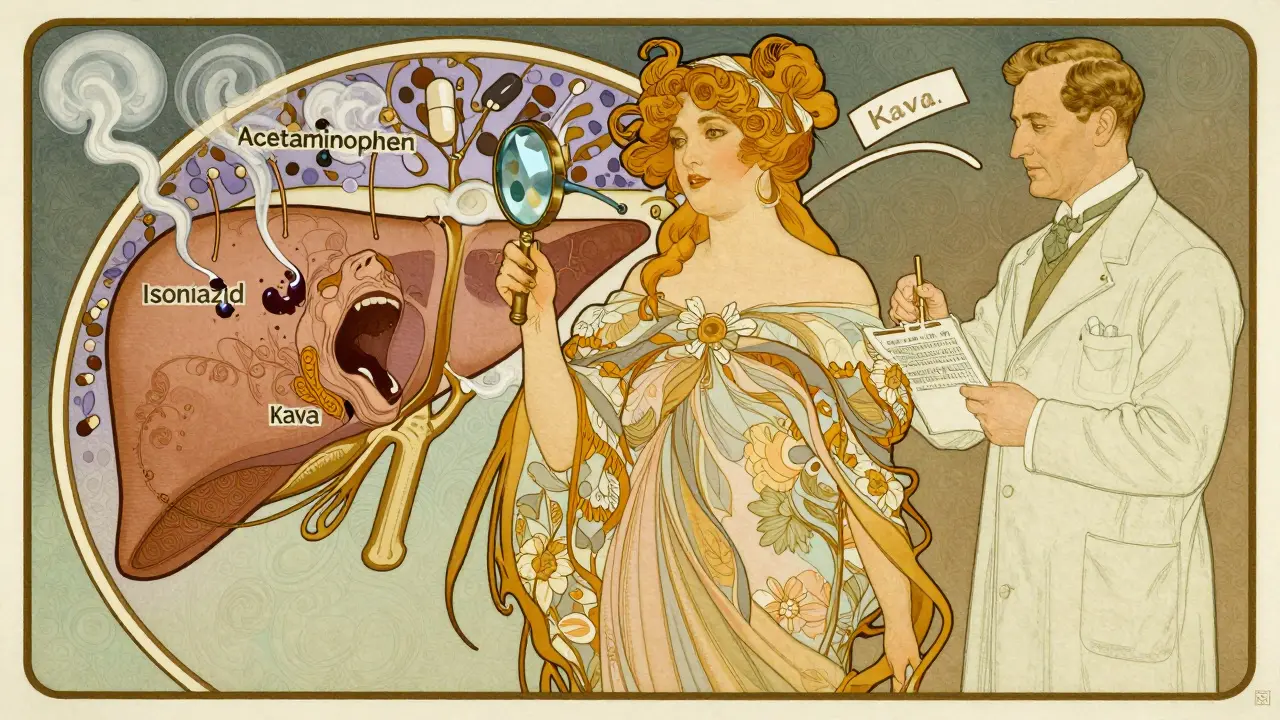
- Isoniazid - A key drug for tuberculosis, it causes liver injury in about 1% of users. The risk jumps to 2-3% if you’re over 35. Monthly liver tests are recommended during treatment. One patient on Reddit said his ALT spiked to 1,200 after two months-his liver took six months to recover.
- Antiepileptics like carbamazepine and phenytoin - These carry a small but real risk of liver damage. Genetic testing for HLA-B*57:01 can help identify those at highest risk before starting treatment.
- Herbal and dietary supplements - This is the fastest-growing cause of DILI. Products with green tea extract, kava, anabolic steroids, and weight-loss formulas are frequent offenders. Between 2004 and 2009, supplements caused 7% of DILI cases. By 2019, that number jumped to 20%. Men are more likely than women to get liver injury from supplements.
Why Do Some People Get It and Others Don’t?
It’s not just about the drug-it’s about you. Your genes, age, liver health, and other meds you take all play a role. For example, if you have the HLA-DRB1*15:01 gene, you’re more than five times as likely to get liver injury from amoxicillin-clavulanate. Older adults, especially those over 55, are at higher risk. Women are more likely to develop DILI overall, but men are more likely to get it from supplements.
Some people’s livers process drugs differently. If your body makes too many toxic byproducts during metabolism, or if you’re taking multiple drugs that compete for the same liver enzymes, your risk goes up. That’s why polypharmacy-taking five or more medications-is a major red flag. One study showed that pharmacist-led medication reviews reduced DILI cases by 23% in people on multiple drugs.
How to Monitor Your Liver Safely
Monitoring isn’t one-size-fits-all. Here’s what experts recommend based on the drug you’re taking:
- For isoniazid (TB treatment): Get liver tests monthly for the first three months, then every three months. Stop the drug if ALT rises above 3-5 times normal, or if you develop symptoms.
- For valproic acid or carbamazepine: Baseline test before starting, then every 2-4 weeks for the first few months. After that, every 3-6 months.
- For acetaminophen: No routine monitoring needed for regular use-but never exceed 3-4 grams daily. Keep track of all products you take that contain it (cold meds, pain relievers, sleep aids).
- For statins: Routine liver testing isn’t recommended. The risk of serious injury is less than 1 in 100,000 per year. But if you feel unusually tired or notice yellowing of your skin, get tested.
- For herbal supplements: No standard monitoring exists. If you’re taking them, assume risk. Talk to your doctor before starting anything new.
Doctors use the RUCAM scale to judge how likely a drug is to have caused the injury. A score of 8 or higher means it’s “highly probable.” This helps avoid blaming the wrong medicine.
What to Do If You Suspect DILI
If you think a medication is hurting your liver, don’t panic-but don’t wait either. Stop the drug immediately and call your doctor. In most cases (about 90%), liver enzymes start improving within 1-2 weeks after stopping the offending drug. Recovery can take 3-6 months. For some, damage is permanent.
For acetaminophen overdose, time is everything. N-acetylcysteine works best if given within 8 hours. After 16 hours, its effectiveness drops to 40%. Don’t wait for symptoms to get worse. If you took too much, go to the ER-even if you feel fine.
Prevention Is the Best Strategy
You can’t always predict who will get DILI, but you can reduce your risk:
- Always tell your doctor and pharmacist about every medication and supplement you take-even “natural” ones.
- Don’t combine multiple painkillers. Many cold and flu meds contain acetaminophen. You could easily hit 4 grams without realizing it.
- Be skeptical of supplements marketed for weight loss, muscle gain, or “liver detox.” These are the most common culprits.
- Ask if genetic testing is available before starting high-risk drugs like isoniazid or flucloxacillin.
- Use electronic health record alerts if your provider has them. Early warnings can prevent serious injury.
One patient on a liver support forum said, “My pharmacist caught the interaction between my new antibiotic and my seizure meds before I even took the first pill.” That’s the kind of safety net we need more of.
What’s New in DILI Research?
Science is catching up. In 2021, researchers developed a tool called the DILI-similarity score that predicts liver risk based on a drug’s chemical structure-with 82% accuracy. That could help drugmakers design safer medicines before they even hit the market.
New blood biomarkers are also being tested. MicroRNA-122 rises in the blood 12-24 hours before ALT does, meaning we might detect liver damage earlier than ever. Full-length keratin-18 is another marker that shows when liver cells are dying.
The FDA now requires drug developers to check for mitochondrial toxicity-something that caused past drugs like troglitazone to fail. These changes could mean fewer dangerous drugs reach the market in the future.
Final Thoughts
Drug-induced liver injury is silent until it’s not. It doesn’t care if you’re healthy, young, or taking something “natural.” The liver is a hard worker, but it has limits. The best defense is awareness-know what you’re taking, know the risks, and know the signs. If you’re on a high-risk medication, ask your doctor about monitoring. If you’re taking supplements, be honest with your provider. Most DILI cases are preventable. You just need to pay attention before it’s too late.