
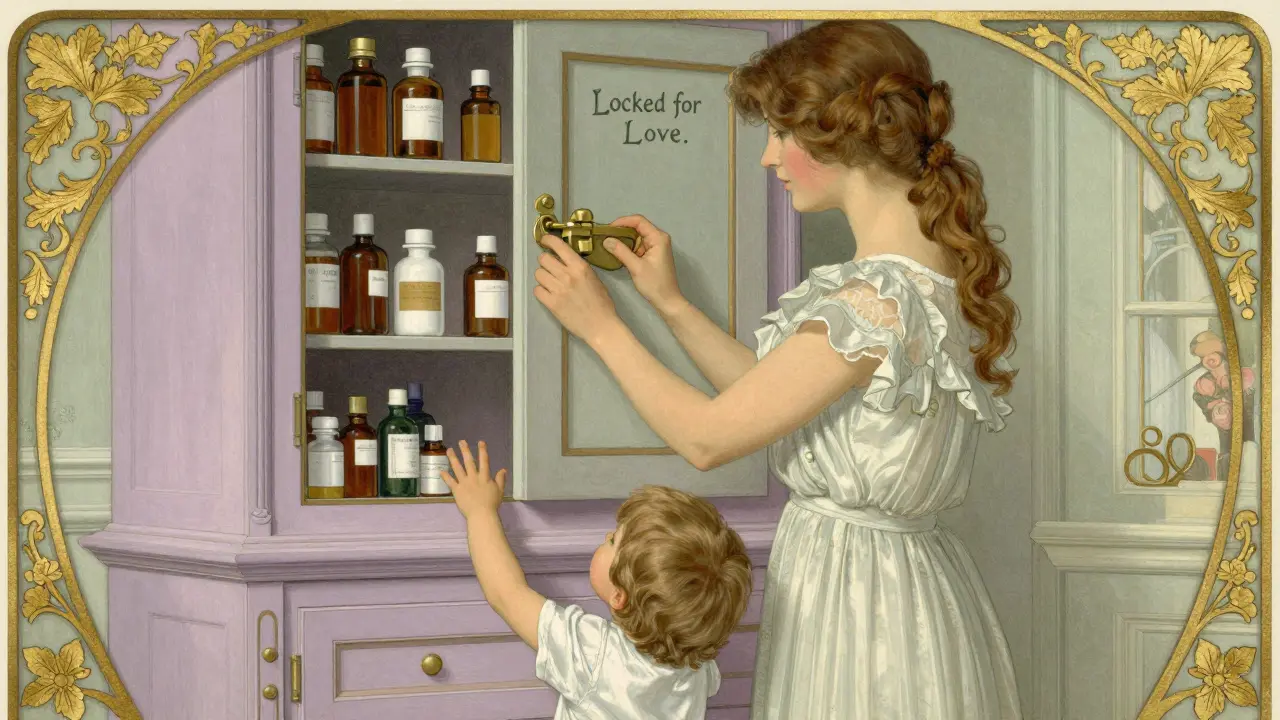
Every year, over 50,000 children under six in the U.S. end up in emergency rooms because they swallowed something they shouldn’t have. Most of these aren’t accidents in the traditional sense-they’re exploratory ingestions. These happen when toddlers, driven by natural curiosity, grab something within reach and put it in their mouth. It’s not rebellion. It’s development. And it’s preventable.
Why Toddlers Swallow What They Shouldn’t
Children between 1 and 4 years old are at the highest risk. At this age, they’re learning to crawl, pull up, walk, and explore everything with their hands and mouths. They don’t understand danger. To them, a brightly colored bottle on the counter looks like a toy. A sweet-smelling liquid might seem like juice. A pill that looks like candy? That’s a snack. According to the American Association of Poison Control Centers, 90% of all poison exposures happen in kids under six. Liquid medications are especially dangerous-they’re 69% more likely to cause injury than pills. Why? They’re easier to swallow. A child doesn’t feel the sting of a powder or the grit of a tablet. A liquid just goes down. And if it tastes like grape or cherry? Even better.Where the Danger Hides
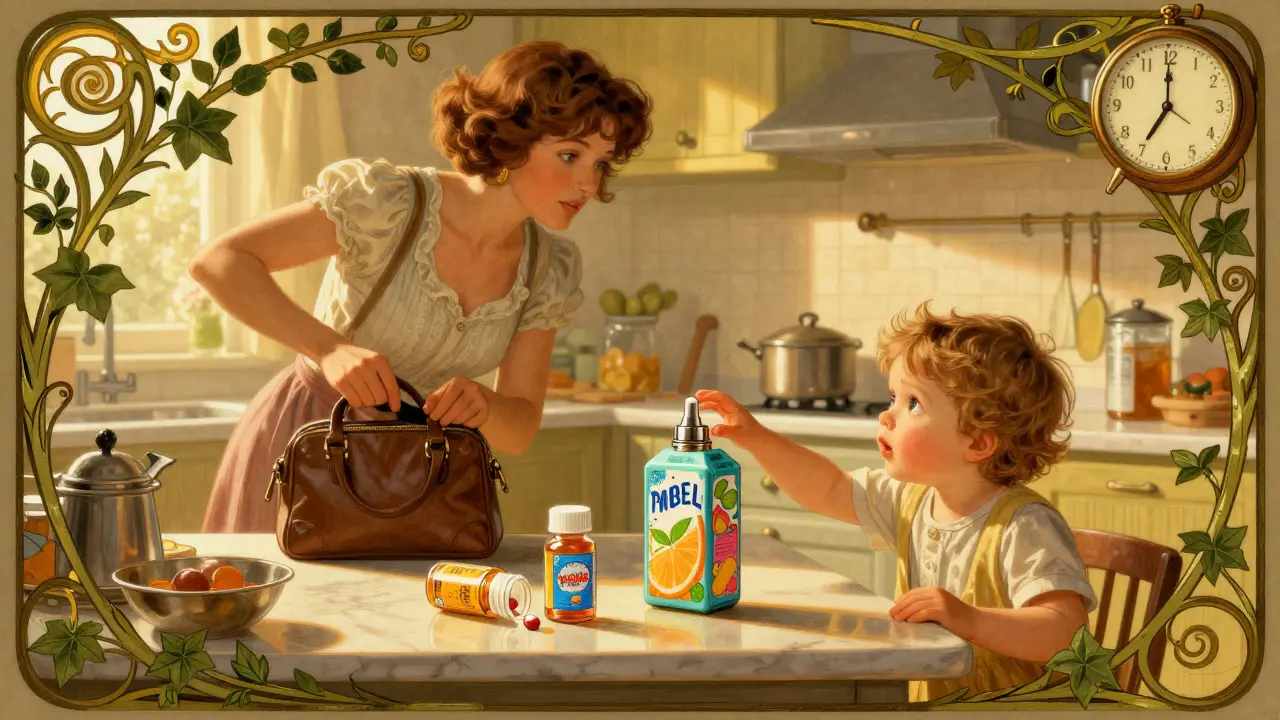
Most people think poisonings happen because of unlocked cabinets or forgotten medicine. But the real problem is less obvious. Here’s where most incidents occur:- Handbags and backpacks-22% of poisonings happen when visitors leave their meds in a purse or bag on the floor. A toddler pulls it open and finds a bottle of painkillers or allergy syrup.
- Countertops and tables-meds left out during morning routines, especially when parents are rushing. One study found 68% of parents admit to leaving pills out during busy mornings.
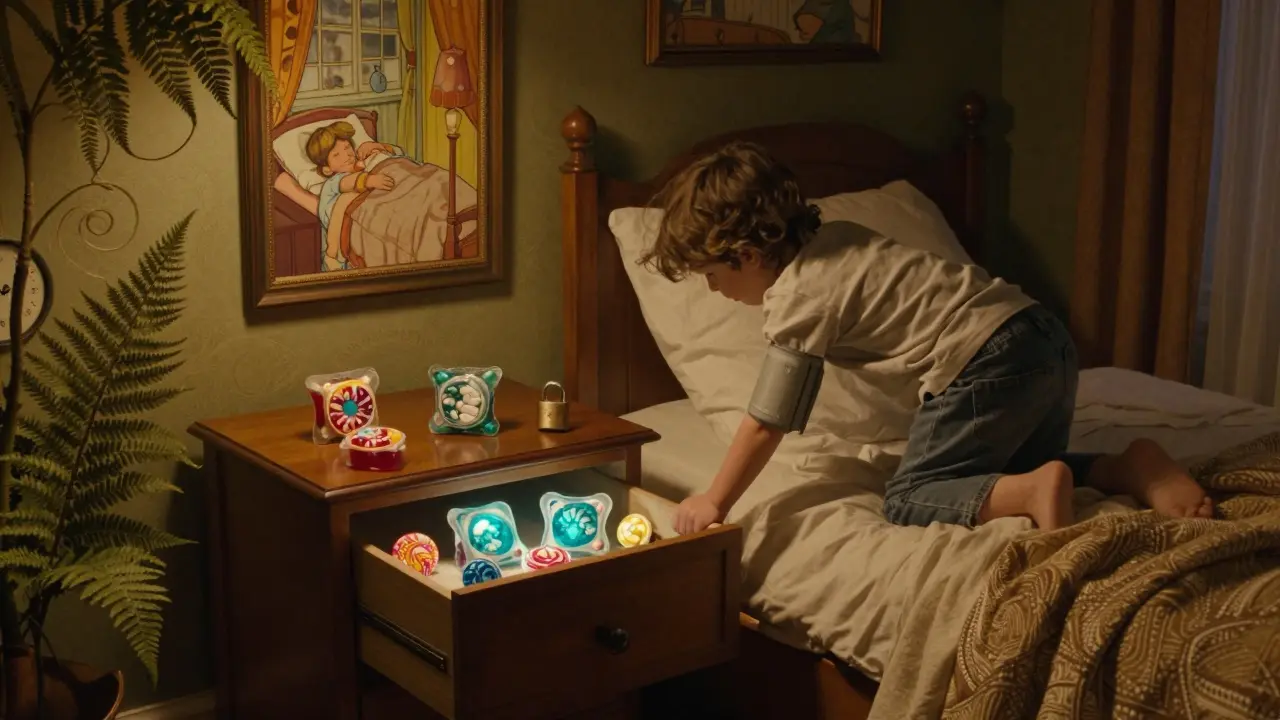
- Grandparents’ homes-71% of caregivers report safety rules are ignored at relatives’ houses. A bottle of blood pressure medicine or diabetes pills in a nightstand can be deadly.
- E-cigarette refills-liquid nicotine looks like juice, smells like candy, and comes in colorful bottles. Poison control calls for nicotine poisoning in kids jumped 1,500% between 2012 and 2020.
- Laundry pods-though manufacturers have improved packaging, they still account for 11% of pediatric poisonings. The outer film is soft, shiny, and irresistible to little hands.
What Actually Works: 5 Proven Prevention Strategies
1. Lock It Up-High and Locked
Don’t just store medicines out of reach. Store them above reach. Keeping hazardous items in locked cabinets at least 1.5 meters (5 feet) off the ground stops 82% of access attempts by children under four. Why? Most toddlers can’t climb, open locks, or reach that high-even if they’re pulling up on furniture. Use child-resistant locks on cabinets. They’re cheap, easy to install, and work even if the door isn’t shut all the way. The National Safety Council says this single change reduces poisonings by 45%.2. Use the Right Dosing Tool-Not a Spoon
Never use a kitchen spoon to give medicine. A 2021 study in Pediatrics found that 76% of parents made dosing errors with spoons. A teaspoon isn’t a teaspoon. One family’s "teaspoon" might hold 3 ml. Another’s might hold 7 ml. That’s a 133% difference. Always use the measuring cup, syringe, or dropper that comes with the medicine. Teach everyone who gives meds-grandparents, babysitters, nannies-to use it. A 27-minute training session using the "teach-back" method (where the caregiver repeats the steps) boosts accuracy to 82%.3. Keep It in the Original Bottle
Transferring pills or liquids into new containers is a major mistake. 29% of poisonings happen because a child mistakes repackaged medicine for food. A child might think a pill in a Tic-Tac box is candy. Or a syrup in a juice bottle is juice. Always keep products in their original packaging. That way, labels with warnings, ingredients, and expiration dates stay visible. If you’re traveling, use a pill organizer with clear labels-not a random container.4. Use Bittering Agents and Smart Packaging
Some household products now have a bitter chemical called denatonium benzoate added to them. It’s the bitterest substance known to humans. Even a drop makes your mouth feel like you swallowed sandpaper. This doesn’t stop a child from tasting something-but it stops them from swallowing more than once. Research shows bittering agents reduce multiple swallows by 68%. The FDA is considering requiring it in all e-liquid nicotine products by 2025, based on Australian data showing an 82% drop in ingestions after implementation. Also, look for products with double-latch caps or opaque packaging. Laundry pods and nicotine refills have improved because of these changes. But they’re not perfect. Stay alert.5. Check Every 3 Months-At Child’s Eye Level
Children grow fast. What was out of reach last month might be reachable today. The CDC recommends checking every room at your child’s eye level every 3 months. Pay special attention during key milestones:- 8-10 months: Pulling up to stand
- 12-15 months: Walking
- 18-24 months: Climbing on furniture
What Doesn’t Work
Many parents think child-resistant caps are enough. They’re not. The Poison Prevention Packaging Act of 1970 cut aspirin deaths by 45% between 1974 and 1992. But today, only 54% of parents consistently reseal those caps after each use. For kids aged 18-24 months, that number drops to 39%. Also, don’t rely on warnings like "Keep out of reach of children." That’s not a safety measure-it’s a legal disclaimer. Real safety means action: locking, storing, and supervising.What to Do If It Happens
If you suspect your child swallowed something dangerous:- Don’t wait-call Poison Control immediately at 1-800-222-1222.
- Don’t induce vomiting-it can make things worse.
- Don’t give milk or charcoal-unless a poison specialist tells you to.
The Bigger Picture
This isn’t about being perfect. It’s about reducing risk. Even the most careful parents make mistakes. Rushing in the morning. Forgetting meds in a bag. Letting Grandma’s house be "different." The goal isn’t to eliminate every risk. It’s to make it so hard for a child to get to something dangerous that they have to work at it-and they’re not strong enough to do that. New risks keep appearing: concentrated cannabis edibles, buprenorphine patches, and unregulated supplements. But the core strategy stays the same: lock it up, store it right, and know what to do if something goes wrong.Final Checklist: Your 5-Minute Safety Routine
Do this once a week:- Check all cabinets-are they locked?
- Are meds in their original bottles?
- Is the dosing tool clean and ready?
- Are handbags and backpacks on a high shelf?
- Are batteries stored separately, in a locked box?
What’s the most common cause of pediatric poisoning?
The most common cause is accidental ingestion of liquid medications, especially those with sweet flavors like cough syrup or allergy medicine. These account for nearly 70% of all emergency visits for poisoning in children under six. The danger comes from easy access, poor storage, and incorrect dosing tools like kitchen spoons.
Are child-resistant caps enough to prevent poisoning?
No. Child-resistant caps are designed to slow down a child, not stop them. Studies show only 54% of parents consistently reseal these caps after use. For toddlers aged 18-24 months, that number drops to 39%. Even if the cap is closed, if the bottle is left on a counter or in a bag, a child can still reach it. Locking cabinets and storing items out of sight are far more effective.
Why are liquid medications more dangerous than pills?
Liquid medications are easier to swallow and often taste sweet, making them more appealing to children. Unlike pills, which can cause a burning sensation that discourages swallowing, liquids go down easily without warning signs. A child can consume a dangerous dose in seconds. According to WHO data, liquid medications cause 69% more injuries than solid forms.
Should I use activated charcoal if my child swallows something poisonous?
No-unless a poison control specialist tells you to. Activated charcoal was once widely recommended, but recent clinical trials show it doesn’t improve outcomes in most cases. In fact, giving it without professional guidance can delay proper treatment or cause complications. Always call Poison Control first (1-800-222-1222) before doing anything.
What should I do if my child swallows a button battery?
Call 911 or go to the ER immediately. Button batteries can cause severe internal burns in as little as 15 minutes. Do not wait for symptoms. Do not try to induce vomiting. Even if your child seems fine, the damage can be internal and life-threatening. Keep all batteries stored in a locked container, away from remote controls, toys, and hearing aids.
Is it safe to store medicine in the bathroom?
No. Bathrooms are humid, which can degrade medications. More importantly, they’re easy for children to access. A medicine cabinet above the sink is often at eye level for a toddler. Store medicines in a cool, dry place-like a locked bedroom cabinet or kitchen cabinet above the counter. Avoid places near sinks, tubs, or showers where kids can climb or reach.
How can I make sure grandparents follow safety rules?
Have a clear conversation. Bring your own pill organizer and dosing tool to their house. Leave a small lock for their medicine cabinet. Offer to install it. Many grandparents don’t realize how dangerous everyday items are to toddlers. A simple handout or checklist can help. Studies show 71% of caregivers report inconsistent safety practices at relatives’ homes-so don’t assume they know.
Morgan Dodgen 9.03.2026
lol so now we're treating toddlers like nuclear launch codes? 🤡 Lock everything up? What's next, mandatory child-proofing of the entire house? They're not robots, they're humans. Curiosity is evolution. You're just scared of the world. And don't get me started on denatonium benzoate - that's just corporate fearmongering wrapped in a lab coat. Next they'll add bitter taste to air. 😏
Stephen Rudd 9.03.2026
This is what happens when you let overeducated parents turn parenting into a compliance checklist. You think locking cabinets stops kids? My nephew opened a childproof bottle with a butter knife and a smirk. Real prevention? Teach them boundaries. Discipline. Stop treating children like fragile lab rats. Also - laundry pods? That’s a marketing failure, not a parenting failure. Fix the product, not the parent.
Erica Santos 9.03.2026
Oh sweet mercy. So we’re supposed to turn our homes into high-security bunkers because toddlers have a mouth and a brain? 🙄 Let me guess - next article: 'How to Prevent Your Child From Licking a Doorknob: 7 Proven Strategies'.
Maybe the real issue is that we’ve turned every natural developmental behavior into a public health crisis. A child puts something in their mouth. It’s not a tragedy. It’s a lesson. And if they live? They learn. If they don’t? Well. That’s why we have funerals. Not lockboxes.
APRIL HARRINGTON 9.03.2026
I JUST HAD TO DO THIS LAST WEEK 😭 My 2yo got into my sister's purse and swallowed a whole bottle of children's ibuprofen. I thought I was gonna lose her. I screamed. I cried. I called 911. I thought I was the worst mom ever.
Turns out? She’s fine. But I now have a locked cabinet. And I cry every time I see a bottle on the counter. This isn’t paranoia. This is survival. I’m not sorry. 🙏
Leon Hallal 9.03.2026
I don't get why people make this so hard. Just keep the medicine away from the kid. If they get it, they get it. It's not that big a deal. I grew up with pills on the counter. I'm fine. My brother ate a whole bottle once. He puked. We laughed. We moved on. Stop overreacting.
Judith Manzano 9.03.2026
I love how this breaks down the real risks instead of just saying 'keep it locked'. The bit about grandparents' homes hit me - I didn’t realize how often safety rules slip when we’re visiting family. I’m going to bring my own pill organizer next time. And I’m definitely using the dosing syringe now. No more spoons. Ever. Thank you for this. Really.
rafeq khlo 9.03.2026
The entire premise of this article is a statistical illusion. You cite 50,000 ER visits. But what percentage of those are non-toxic? What percentage are asymptomatic? What percentage are caused by parental negligence rather than environmental failure? You ignore the systemic failure of pharmaceutical packaging, the lack of regulation on flavoring agents, and the commercialization of pediatric risk.
You offer solutions for the symptom, not the disease. Lockboxes are not prevention. They are appeasement.
Philip Mattawashish 9.03.2026
Let me guess - the author is a pediatric nurse who never had a child. You talk about 'exploratory ingestions' like it's some cute developmental milestone. It's not. It's negligence. You treat children like little scientists, but you don't treat parents like responsible adults. If you can't keep medicine away from a 2-year-old, maybe you shouldn't be in charge of one. This isn't about locks. It's about accountability.
Tom Sanders 9.03.2026
I read this whole thing. Honestly? I’m tired. I have three kids. I work. I sleep 4 hours. I don’t have time to check every cabinet every 3 months. If my kid eats a pill, I call poison control. That’s it. I’m not turning my house into a prison. This feels like guilt-tripping with footnotes.
Jazminn Jones 9.03.2026
The notion that 'child-resistant caps are sufficient' is not only incorrect - it is dangerously naive. The regulatory framework surrounding pharmaceutical packaging has not evolved in tandem with developmental psychology. The Consumer Product Safety Commission’s standards were designed for the 1970s. Today’s toddlers are more agile, more cognitively advanced, and more technologically literate than ever before. A double-latch mechanism is not a luxury - it is a minimum viable safety protocol. Failure to implement it constitutes institutional malpractice.
George Vou 9.03.2026
i think the real problem is that parents think they can outsmart nature. kids are gonna explore. you cant lock the whole world. i had a kid who ate a whole pack of m&ms once. he was fine. now he loves candy. maybe we should just let them learn. instead of turning every snack into a biohazard. also i think the bitter stuff tastes like ass. why not just teach them not to eat random stuff? 🤷♂️